





BioReact
Shedding light on your data.
AI-powered bioprocess optimization.

The only software bioprocess scientists need
BioReact Software turns siloed bioprocess data into actionable insights
Heatmap
Pinpoint which process variables drive performance and where to focus optimization efforts.

Simulated Outcomes
Predict optimal cell growth, yield, and viability conditions - before running a single experiment.

Stir Speed
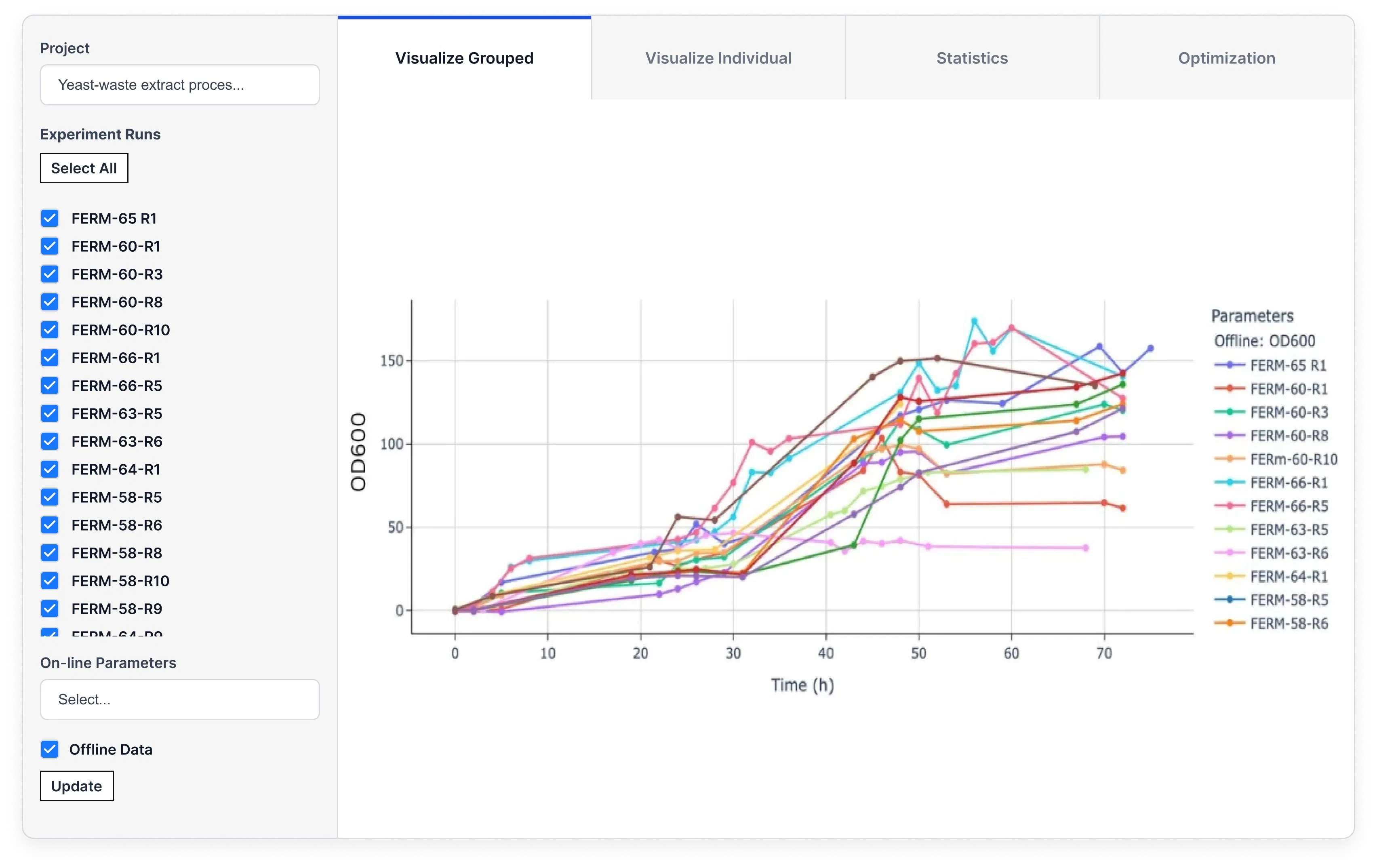
Group experiments by media, feed, or process parameters - compare outcomes to see which inputs matter most.


Modern biology deserves modern software
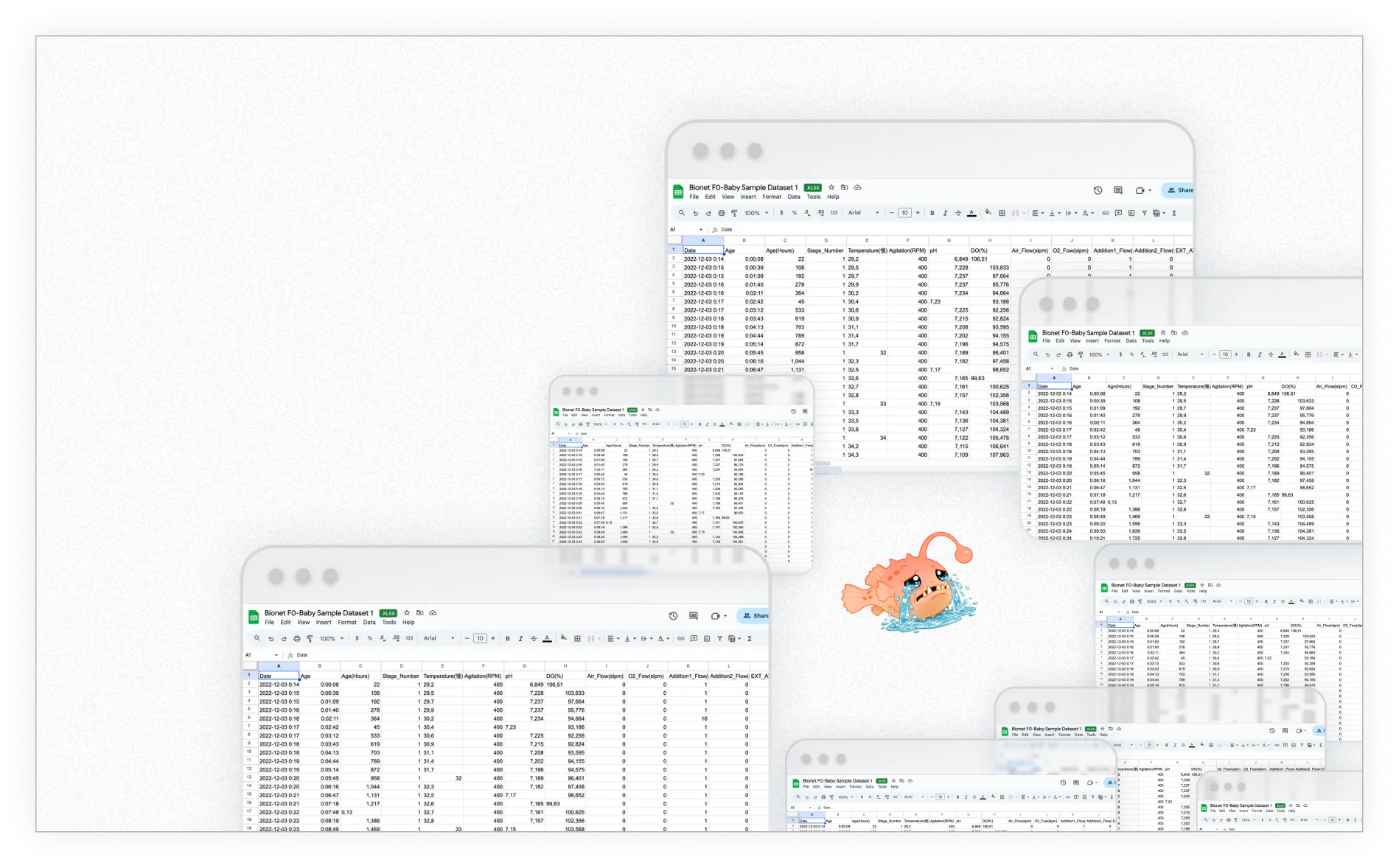
Bioprocess scientists experience a data nightmare
Siloed data leads to hundreds of redundant experiments, longer development cycles, and scientists manually crunching spreadsheets instead of doing science.
Bioprocess scientists experience a data nightmare
Siloed data leads to hundreds of redundant experiments, longer development cycles, and scientists manually crunching spreadsheets instead of doing science.
From siloed spreadsheets to optimized bioprocess, BioReact software simplifies the process for scientists in minutes
- Structures your data
- Trains the model
- Predicts ideal conditions
- Easily Integrates with your equipment

AI/ML Simulations
Up to 10,000 in-silico experiments per optimization
Data Visualization
Automatic alignment of online & offline time-series data
Statistical Analysis
PCA, ANOVA, Factor Importance, Variation Analysis
Data Management
Sartorius, Infors, Eppendorf, HPLC, ELNs
Validated performance across real-world bioprocess experiments
Benchmarked against traditional DOE methodologies
Increased yield across experiments
Beat scientist DOE's 90% of the time

Estimated savings per project
Scientists already using BioReact
Our partners and investors


Frequently Asked Questions
What does BioReact do?
BioReact is a one-size-fits all software that allows scientists to store data, unify data from experiments, conduct basic visualizations, statistical analysis, and provides AI models to optimize parameters and media conditions.